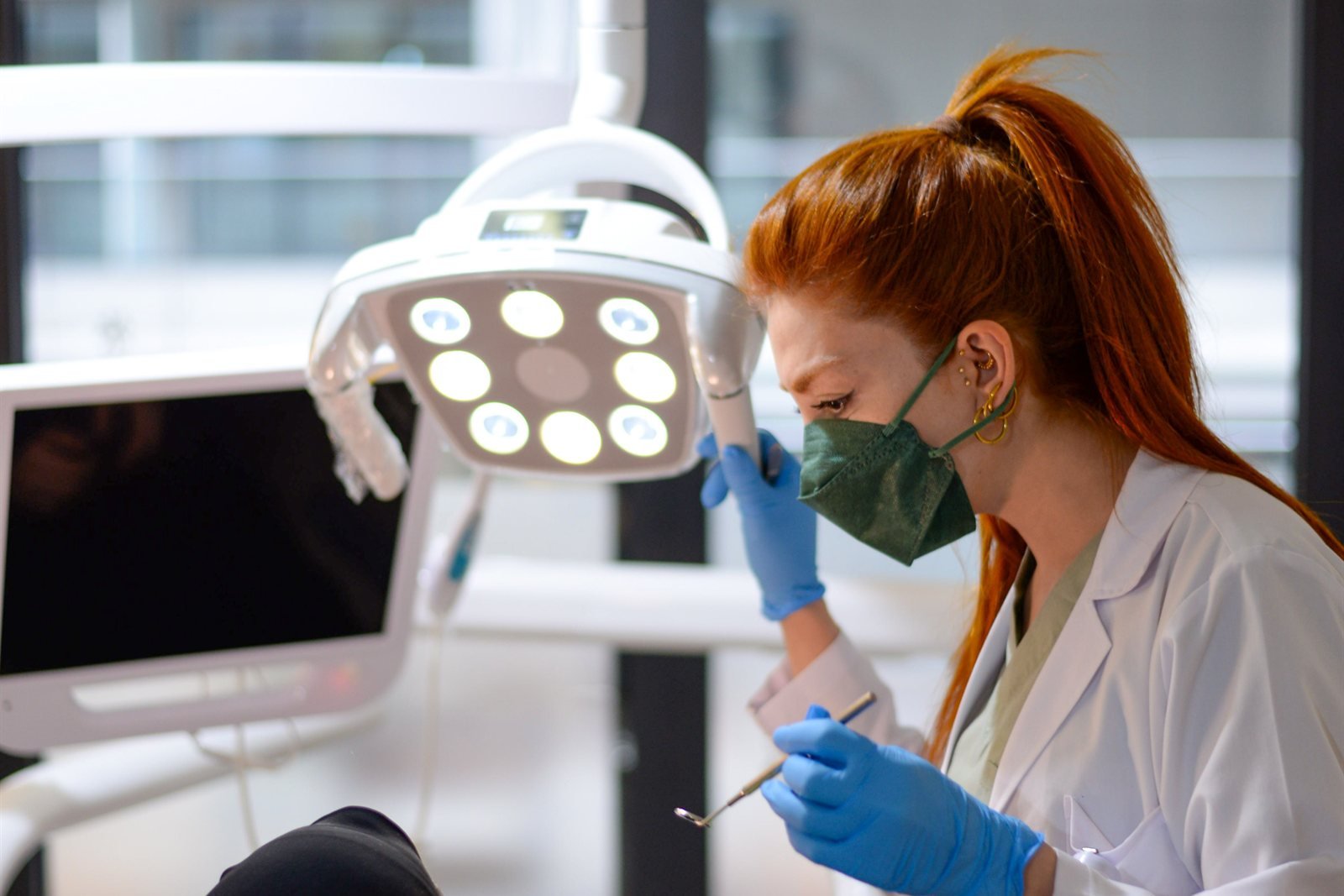
Knocked-out teeth, fractures, and gum injuries need care fast. Our board-certified periodontists provide prompt evaluation and treatment for traumatic dental injuries at our Wilshire Blvd practice.
If you are experiencing a dental emergency right now, please call our office immediately at (310) 473-3800 rather than waiting to book online. This page is for general information only.
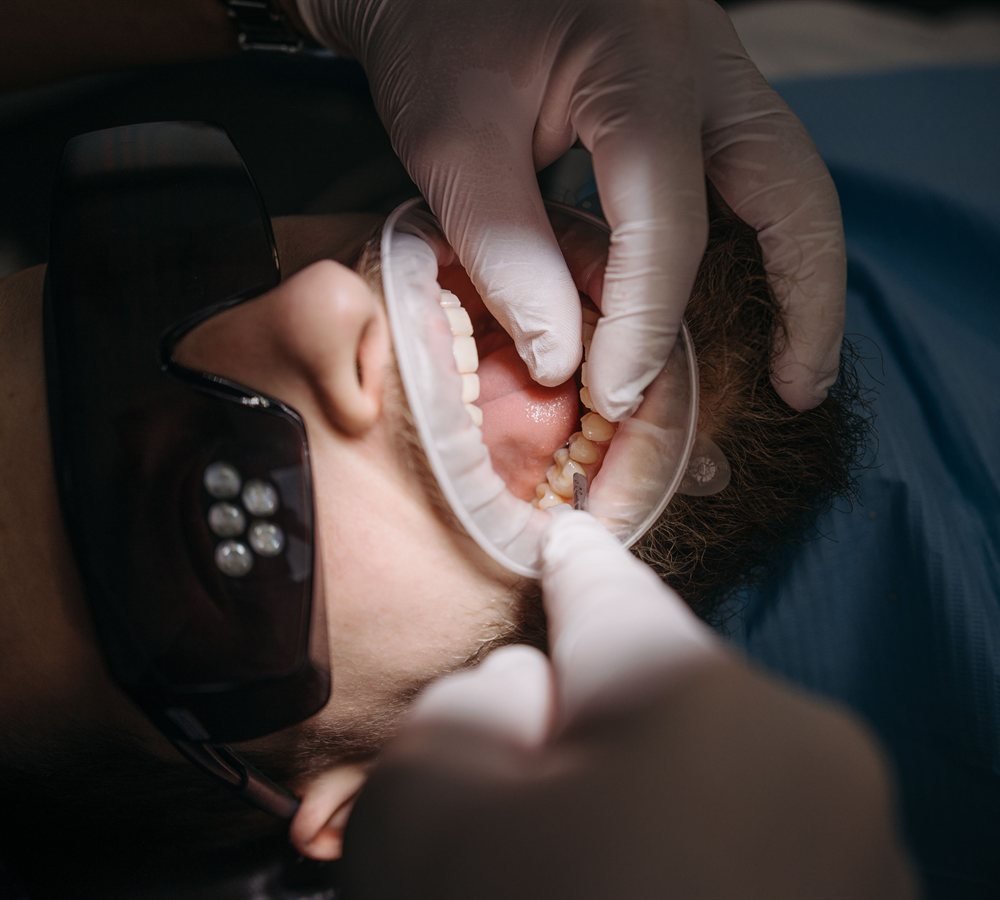
Dental trauma refers to any injury to a tooth, its supporting bone, or the surrounding gum tissue. It can happen in an instant, a fall, a sports collision, a car accident, or simply biting down on something hard, and the outcome for the tooth often depends on how quickly the injury is treated.
At LA Periodontics, our team is experienced in stabilizing traumatic injuries, protecting the health of the surrounding bone and gum tissue, and planning the restorative or surgical care a tooth needs after an accident. If you have suffered a dental injury, please call our office right away. This page provides general guidance, it is not a substitute for a same-day evaluation.
Every traumatic injury is different, but our approach follows a consistent, careful sequence designed to give your tooth and gum tissue the best possible chance of recovery.
We assess the injured tooth, surrounding gum tissue, and supporting bone to understand the extent of the trauma and rule out related soft tissue injuries.
X-rays or 3D imaging help us see root fractures, bone involvement, and the position of a tooth that has been loosened or displaced.
Loosened or displaced teeth are often splinted to neighboring teeth, holding them in place while the periodontal ligament and bone heal.
Depending on the injury, follow-up may include root canal coordination with your dentist, gum tissue repair, bone grafting, or eventual implant planning.
Dr. Rana Shahi, Dr. Priscilla Young, and Dr. Ivana Yi are all board-certified periodontists with training in stabilizing and treating traumatic dental injuries.
Traumatic injuries are time-sensitive. Call our Wilshire Blvd office directly and our team will work to get you in as quickly as possible.
3D dental imaging allows us to evaluate root fractures and bone involvement with a level of detail standard X-rays cannot provide.
From initial stabilization through tooth extraction, bone grafting, or dental implants, we manage every stage of recovery under one roof.
We treat the full range of traumatic dental injuries, from a chipped tooth to a fully avulsed tooth that has been knocked out of the socket.
A tooth that has been completely displaced from its socket. Time is critical, a tooth re-implanted within the first hour has a meaningfully better chance of survival.
A tooth that has been loosened, pushed sideways, or partially displaced from its socket without being fully knocked out. It usually needs prompt splinting.
A crack or break in the visible tooth or the root beneath the gumline. Some fractures can be restored, while others may require extraction and later replacement.
Lacerations, punctures, or bruising of the gums, lips, or cheek tissue that often accompany a dental injury and need their own evaluation and care.
If a dental injury just happened, these general steps can help protect the tooth while you get to our office or an emergency room. Call us right away at (310) 473-3800.
Handle by the crown. If a tooth has been knocked out, pick it up by the biting surface only, never touch the root.
Keep it moist. Rinse gently with water if dirty, then store the tooth in milk, saline, or held in the cheek, never let it dry out.
Try gentle re-insertion. If comfortable doing so, gently reposition the tooth back into its socket and bite down softly to hold it in place.
Control bleeding. Apply gentle pressure with clean gauze or a cloth to any bleeding gum or soft tissue.
Manage swelling. A cold compress on the outside of the cheek can reduce swelling and discomfort on the way to our office.
Seek care within the hour. The sooner a knocked-out or loosened tooth is evaluated and stabilized, the better its long-term outlook.
If you or a family member has suffered a dental injury, call our Wilshire Blvd office right away. For less urgent concerns, request an appointment and our team will follow up promptly.
Mon–Fri 8am–5pm · 11859 Wilshire Blvd, Suite 550, Los Angeles
Pick the tooth up by the crown, not the root, rinse it gently if dirty, and try to keep it moist in milk, saline, or tucked in your cheek. Call our office immediately at (310) 473-3800, prompt care within the first hour gives a knocked-out tooth the best chance of being saved.
It depends on the severity. A small chip in the enamel is usually not urgent, but a fracture that exposes the inner tooth structure, causes significant pain, or involves bleeding gum tissue should be evaluated promptly to prevent infection or further damage.
Some minor loosening can stabilize with time, but a tooth that is noticeably mobile after an injury usually needs splinting to a neighboring tooth so it can reattach properly. Without stabilization, the supporting bone and ligament may not heal correctly.
If our office is closed or you cannot reach us right away, follow the first-aid steps above, especially keeping a knocked-out tooth moist, and seek care at the nearest emergency room or urgent dental clinic. Then call our office as soon as possible so we can evaluate the tooth and plan follow-up treatment.
Splinting time varies by injury, but generally ranges from about two to eight weeks. We monitor healing at follow-up visits and remove the splint once the tooth has stabilized in the bone.
It is common for a traumatized tooth to need a root canal, especially if the nerve was affected. We coordinate closely with your general dentist or an endodontist to make sure that treatment happens on the right timeline alongside our periodontal care.
If a tooth cannot be preserved, we discuss replacement options once the site has healed, which may include bone grafting to preserve the ridge and a future dental implant. We will walk you through the timeline and what to expect at each stage.
We evaluate traumatic injuries in patients of many ages. Call our office and our team can advise whether an in-office evaluation with one of our periodontists or a visit to your child's pediatric dentist is the right first step.
We'll confirm your visit within one business day. For a true emergency, please call us directly.
