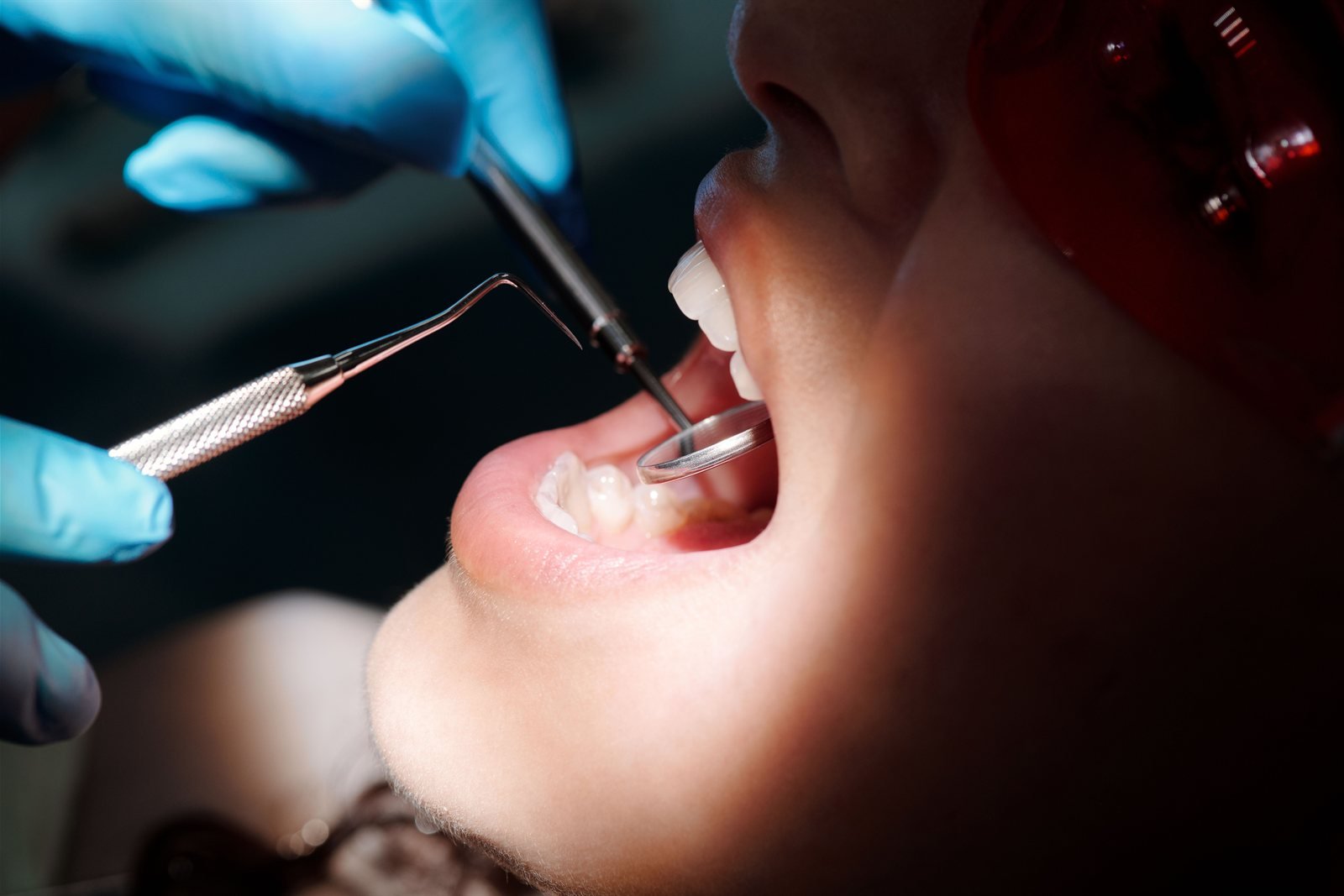
Thorough screening exams and careful, comfortable biopsy procedures to identify and diagnose unusual changes in the mouth early, when they are most manageable.
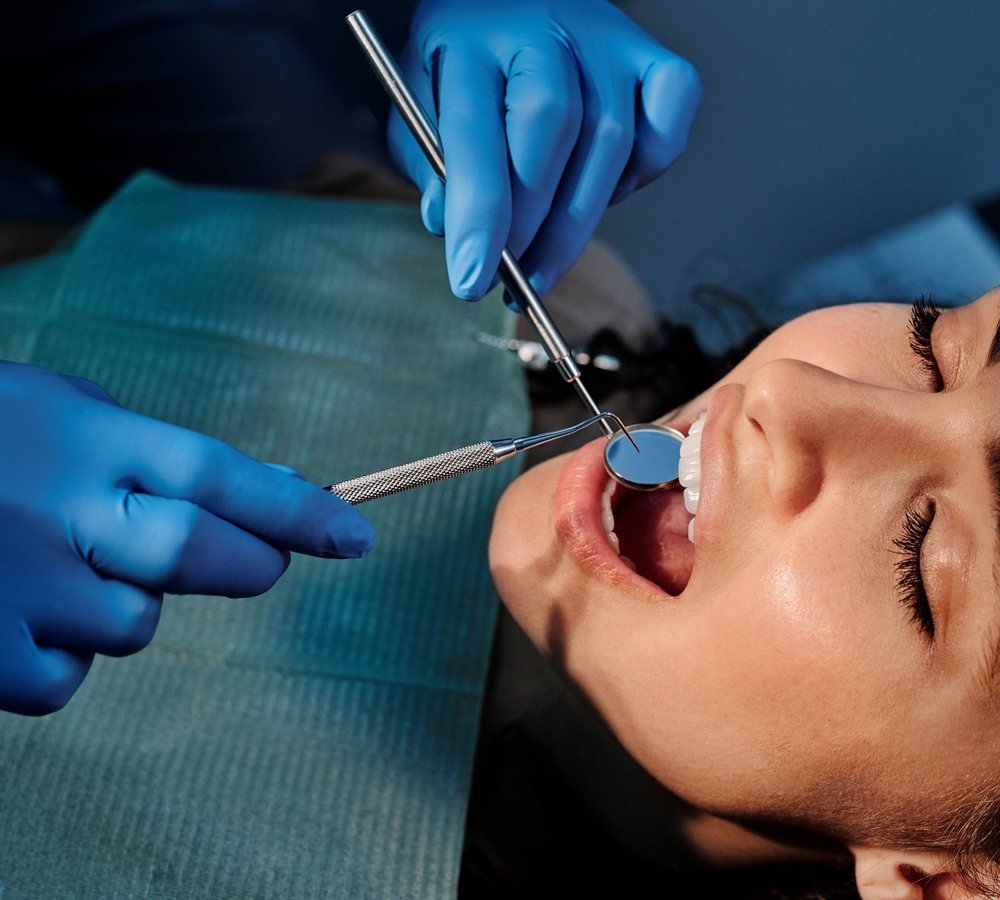
Oral pathology screening is a visual and physical examination of the lips, cheeks, tongue, gums, and other soft tissues of the mouth, looking for anything that does not appear normal. Most changes turn out to be harmless, related to irritation, minor injury, or a passing infection, but a small number warrant a closer look.
When Dr. Rana Shahi, Dr. Priscilla Young, or Dr. Ivana Yi identifies a lesion, patch, or growth that does not resolve on its own or looks unusual under examination, a biopsy may be recommended. A biopsy simply means removing a small tissue sample so it can be examined under a microscope by a pathology laboratory, giving us a definitive answer rather than a guess.
From a routine screening to a lab result, here is how the process generally unfolds at our Wilshire Blvd practice.
A visual and tactile exam of the soft tissues of your mouth, tongue, and gums, typically performed as part of a periodontal visit.
If something warrants a closer look, we discuss what was found, what it might mean, and whether monitoring or a biopsy is the right next step.
A small tissue sample is removed under local anesthesia, either an incisional biopsy (a portion of the tissue) or excisional biopsy (the entire lesion).
The sample is sent to an oral pathology laboratory for analysis. Once results are in, we walk you through the findings and next steps together.
Oral pathology screening benefits from the trained eye of a periodontal specialist who examines soft tissue at every visit, not just when something is already a concern.
Most changes in the mouth are minor and resolve on their own within a week or two, often the result of biting your cheek, a canker sore, or a mild irritation from a denture or appliance. The goal of screening is simply to catch the rare exception early, when treatment tends to be simplest.
None of the signs below are a diagnosis on their own, and self-diagnosis is never a substitute for a professional exam. If you notice any of the following and it has not resolved within about two weeks, it is worth having one of our periodontists take a look.
Early evaluation gives you clarity and peace of mind. Schedule a screening with one of our board-certified periodontists on Wilshire Blvd.
It is a visual and physical exam of the lips, cheeks, tongue, gums, and other soft tissues of the mouth, looking for anything that appears abnormal. It is typically included as part of a routine periodontal visit and takes only a few minutes.
A biopsy is generally recommended when a sore, patch, or growth persists longer than about two weeks, changes in size or color, or does not have an obvious cause. It is the only reliable way to determine what tissue changes represent.
The area is numbed with local anesthetic before the procedure, so patients typically feel pressure rather than pain. Mild soreness at the site for a day or two afterward is normal and can usually be managed with over-the-counter pain relief.
An incisional biopsy removes a small portion of a larger area of tissue for evaluation, while an excisional biopsy removes an entire lesion, often when it is small enough to take out in one visit. Your periodontist will recommend the approach best suited to what is found.
Tissue samples are sent to an outside oral pathology laboratory, and results generally take about one to two weeks. Our office will contact you as soon as results are available to review them together.
No. The large majority of lesions and tissue changes found during a screening are benign, often related to minor trauma, irritation, or infection. Screening and biopsy exist to identify the small minority that need further attention, and to rule out concern for everyone else.
A soft-tissue screening is part of every routine periodontal exam, so most patients are screened at their regular cleaning and maintenance visits. If you notice a new or changing area between visits, it is worth scheduling an evaluation sooner.
If a result requires further care, we walk you through the findings clearly and help coordinate next steps, which may include referral to an oral surgeon or specialist depending on what is found. Our team stays involved throughout the process.
Related reading: Oral HPV & Oral Cancer Screening · Periodontal Disease Treatment · All Periodontal Services
We'll confirm your visit within one business day.
